
Organic Chemicals
Product classification
Contact us
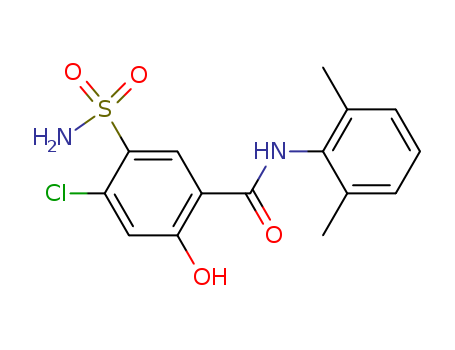
Factory Export Top Purity Xipamide 14293-44-8 In Stock
- Molecular Formula: C15H15ClN2O4S
- Molecular Weight: 354.814
- Melting Point: 255-256 °C
- Refractive Index: 1.652
- PKA: pKa 4.75±0.04(0.4% MeOH in H2O) (Uncertain)
- PSA: 117.87000
- Density: 1.477 g/cm3
- LogP: 4.41620
Xipamide(Cas 14293-44-8) Usage
|
Manufacturing Process |
The 4-chloro-5-sulfamyl salicylic acid used as starting point was prepared in the following way:(a) 4-Chloro-5-Chlorosulfonyl Salicylic Acid: 100 grams 4-chloro salicylic acid was added portionwise with stirring at about -5°C to 275 ml chlorosulfonic acid. The temperature was not allowed to rise above +3°C. At the end of the addition, the solution formed was stirred for 1 hour in an ice bath, then for 1 hour at 20°C and finally for 2 1/2 hours at 80°C oil bath temperature. Then the dark brown solution, after ensuing slow cooling with vigorous stirring, was poured onto ice; the precipitate was vacuum filtered, washed with water and dried. After recrystallization from toluene the compound formed had a melting point of 181° to 183°C.(b) 4-Chloro-5-Sulfamyl Salicylic Acid: 40 grams 4-chloro-5-chlorosulfonyl salicylic acid obtained from (a) was added portionwise with stirring to 250 ml liquid ammonia. This was allowed to stand for 2 hours, then the precipitate was vacuum filtered and dissolved in 500 ml water. The solution was filtered and the filtrate was treated with 2 N hydrochloric acid until no more precipitation occurred. The 4-chloro-5-sulfamyl salicylic acid obtained as the precipitate was filtered off and finally recrystallized from water, MP 258° to 260°C.5.0 grams 4-chloro-5-sulfamyl salicylic acid was suspended in 100 ml water- free chlorobenzene and then 2.44 grams of 2,6-dimethylaniline and 0.9 ml phosphorus trichloride were added to the suspension in turn. The reaction mixture was heated under reflux for 5 hours. After cooling, the chlorobenzene was separated from the precipitate by decantation. The latter was finally collected on a filter and washed, first with chlorobenzene and, after drying, with 2 N hydrochloric acid and water. The compound obtained by recrystallization from methanol had a melting point of 256°C. |
|
Therapeutic Function |
Diuretic, Antihypertensive |
|
Drug interactions |
Potentially hazardous interactions with other drugs Analgesics: increased risk of nephrotoxicity with NSAIDs; antagonism of diuretic effect. Anti-arrhythmics: hypokalaemia leads to increased cardiac toxicity; effects of lidocaine and mexiletine antagonised. Antibacterials: avoid administration with lymecycline. Antidepressants: increased risk of hypokalaemia with reboxetine; enhanced hypotensive effect with MAOIs; increased risk of postural hypotension with tricyclics. Antiepileptics: increased risk of hyponatraemia with carbamazepine. Antifungals: increased risk of hypokalaemia with amphotericin. Antihypertensives: enhanced hypotensive effect; increased risk of first dose hypotension with postsynaptic alpha-blockers like prazosin; hypokalaemia increases risk of ventricular arrhythmias with sotalol. Antipsychotics: hypokalaemia increases risk of ventricular arrhythmias with amisulpride; enhanced hypotensive effect with phenothiazines; hypokalaemia increases risk of ventricular arrhythmias with pimozide - avoid concomitant use. Atomoxetine: hypokalaemia increases risk of ventricular arrhythmias. Cardiac glycosides: increased toxicity if hypokalaemia occurs. Ciclosporin: increased risk of nephrotoxicity and possibly hypomagnesaemia. Cytotoxics: increased risk of ventricular arrhythmias due to hypokalaemia with arsenic trioxide; increased risk of nephrotoxicity and ototoxicity with platinum compounds. Lithium excretion reduced (increased toxicity). |
|
Metabolism |
Xipamide is excreted in the urine, partly unchanged and partly in the form of the glucuronide metabolite. In patients with renal impairment excretion in the bile becomes more prominent. |
InChI:InChI=1/C15H15ClN2O4S/c1-8-4-3-5-9(2)14(8)18-15(20)10-6-13(23(17,21)22)11(16)7-12(10)19/h3-7,19H,1-2H3,(H,18,20)(H2,17,21,22)
14293-44-8 Relevant articles
Structure activity relationship for derivatives of xipamide (4 chloro 5 sulfamoyl 2',6' salicyloxylidide)
Liebenow,Leuschner
, p. 240 - 244 (2007/10/09)
The synthesis of various derivatives of ...
14293-44-8 Process route

-
-
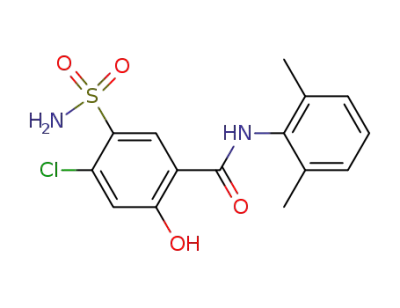
14293-44-8
xipamide
| Conditions | Yield |
|---|---|
|
|
|
|
|
-
-
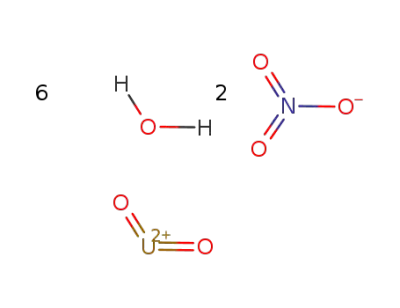
uranyl nirate hexahydrate

-
-
14293-44-8
xipamide
-
-
[UO2 (4-chloro-N-(2,6-dimethylphenyl)-2-hydroxy-5-sulfamoylbenzamide)2]*3H2 O
| Conditions | Yield |
|---|---|
|
With
sodium hydroxide;
In
water; acetone;
at 20 ℃;
for 72h;
|
98%
|
Related products
-
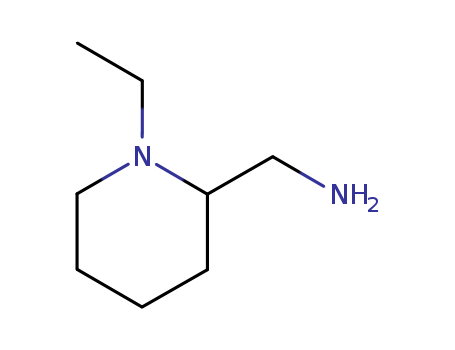
1-Ethylpiperidine-2-methylamineDetail
CAS:37782-46-0
-
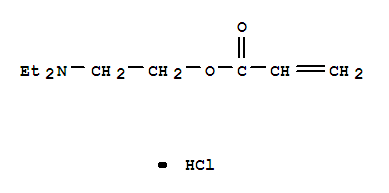
2-(diethylamino)ethyl acrylate hydrochlorideDetail
CAS:26536-86-7
-
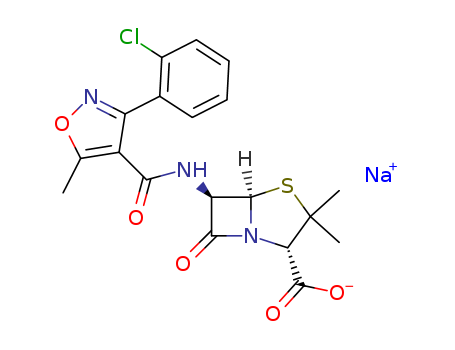
Sodium cloxacillinDetail
CAS:642-78-4
-
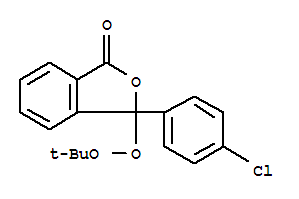
3-(tert-butyldioxy)-3-(4-chlorophenyl)phthalideDetail
CAS:30723-78-5